
Why you can't swim over the Sunken City of Kekova
Updated: 2026-07-31
Every day in season, someone on a boat rail above Dolchiste asks the same question: can we get in? The answer is no — and the reason is better than bureaucracy.
The short answer
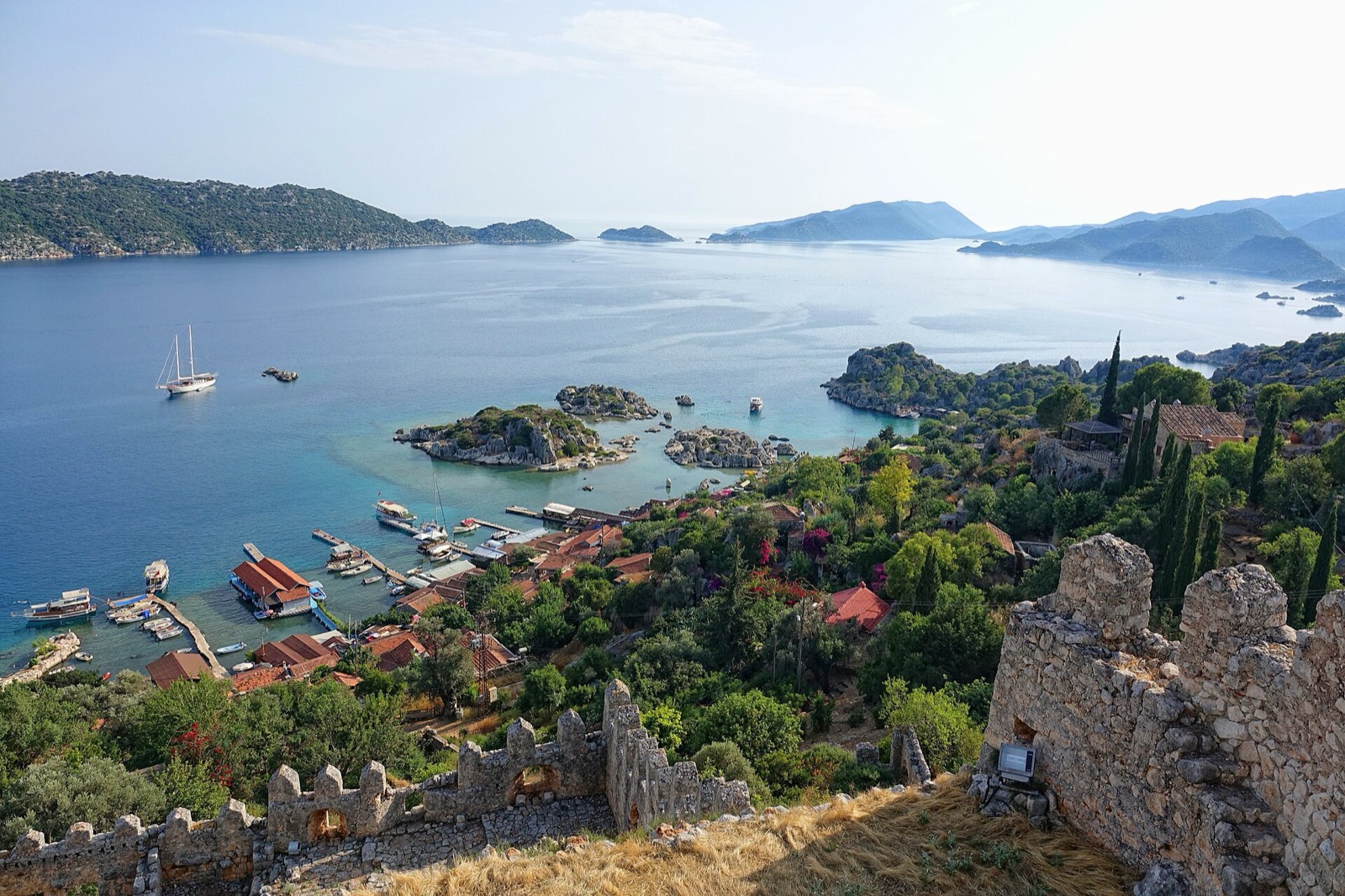
The Sunken City is a first-degree protected archaeological site. Swimming, snorkelling and scuba diving over the ruins are banned to protect what is, in effect, an unexcavated underwater museum — walls, staircases, quays and artefacts that survive precisely because hands and fins have been kept off them.
How did the city sink?
The town was Dolchiste, a Lycian settlement on the northern shore of Kekova island. In the 2nd century AD a sequence of earthquakes dropped this stretch of coast several metres, and the lower town went under. It was partly rebuilt, then abandoned for good after later quakes and Arab raids.
That is why the ruins look domestic rather than monumental. You are not looking at a temple complex that sank; you are looking at the waterfront of a working harbour town that is now at the wrong height.
What is the law, exactly?
Two protections overlap. The wider Kekova region has been a Specially Protected Environmental Area since 1990, which governs building, anchoring and marine activity across the whole roadstead. The sunken remains themselves carry first-degree archaeological site status, the strictest category in Turkish heritage law, which rules out swimming, diving and anchoring directly over them.
Enforcement is real. The corridor is patrolled in season, boats are tracked, and captains carry the consequences of what their passengers do. This is why your crew will say no without much discussion — the penalty lands on them, not on you.
What are boats allowed to do?
Licensed excursion boats cruise slowly along the shoreline so passengers can view the ruins through the clear water, without anchoring or stopping over the protected zone. Your captain is not being difficult when the boat keeps moving — the corridor and the pace are the rules of the site.
Is there any legal way to pass directly over the ruins?
Yes, one: guided sea kayaking. Kayak groups on licensed routes may paddle across the surface above the sunken structures — no anchor, no touching, nothing but a hull's shadow passing over. It is the closest legal encounter with Dolchiste and the main reason the kayak trip exists.
From a kayak you sit centimetres above the water rather than three metres above it on a deck, and the walls read completely differently. If seeing the ruins properly is the point of your day, this is the version to book.
Where do you actually swim on a Kekova day?
At permitted coves and bays around the Kekova roadstead, outside the protected zone — every boat builds its day around them. The water is the same impossible clarity; the difference is that below you is seagrass and fish rather than someone's Byzantine kitchen floor.
Questions people actually ask
Can you scuba dive at Kekova?
Not over the protected ruins. Kaş, forty minutes west, is Türkiye's best diving town, with reefs, walls and wrecks that are open to divers.
Why is the area protected?
Because the sunken remains of Dolchiste are an intact archaeological record. The region has been a Specially Protected Environmental Area since 1990 and the ruins hold first-degree site status — that protection is why there is still something to see.
What happens if someone swims there anyway?
The zone is patrolled in season and the fine falls on the boat and its captain as much as the swimmer. In practice crews simply will not let it happen, which is why the question gets a flat no rather than a negotiation.
Can kayaks really cross above the ruins?
Yes — guided groups may pass over the surface without stopping or touching anything. It is the only craft allowed directly above the site.